










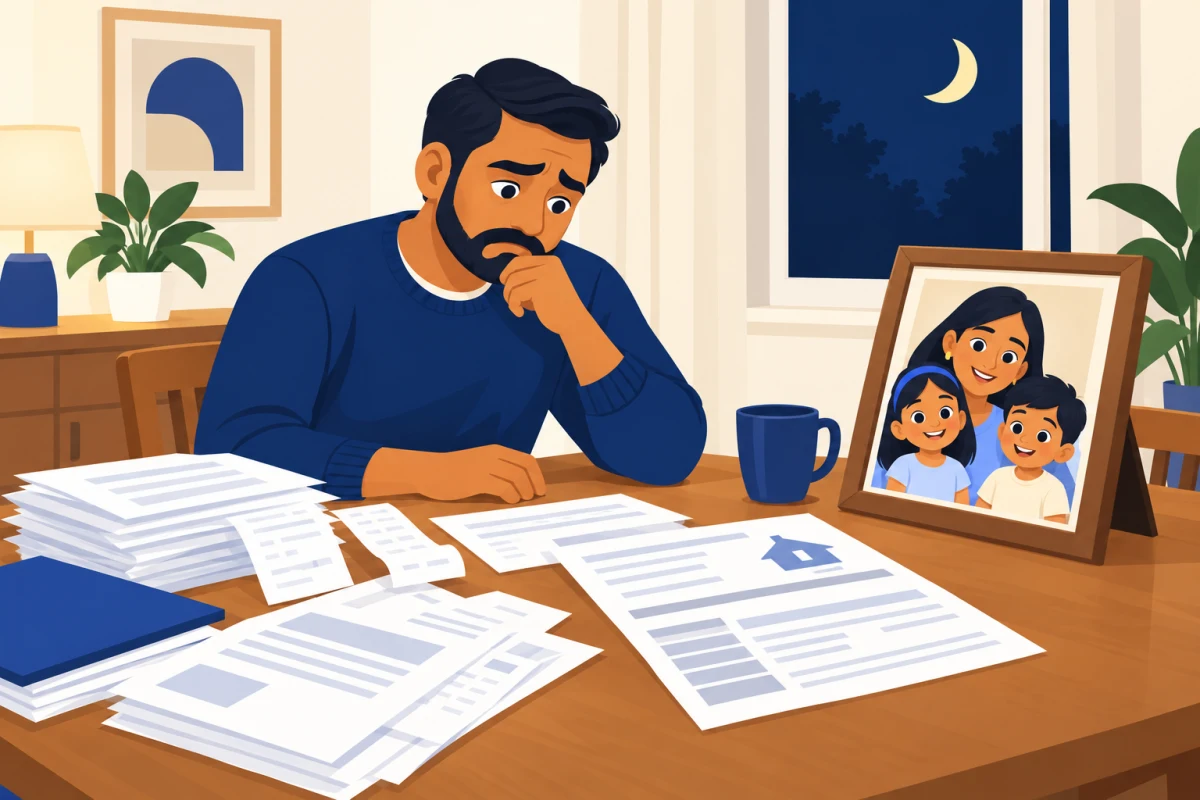
If you could not work for a year, what would pay the bills?
Critical illness and disability cover can pay you while you recover, so the mortgage and bills do not fall behind.
Book a free reviewIllustration. Coverage is subject to underwriting and insurer approval.Critical illness and disability coverage
Most people plan for dying. Many more live through a serious illness and can't work for a while.
This is where money usually runs short during recovery, and what can fill the gap.
-
The problem
You survive a heart attack, stroke or cancer, but can't work for months.
Your income stops while the bills keep coming, and recovery has to come first.
The solutionCritical illness insurance
A lump sum if you are diagnosed with a covered condition and meet the policy terms, to use however you need.
-
The problem
You're self-employed, so there's no sick pay.
If an injury keeps you off work, the business income can stop with you.
The solutionDisability insurance
A monthly benefit while you can't work because of a covered illness or injury, after the waiting period.
-
The problem
Government benefits are short and limited.
They help, but they rarely replace what your household spends each month.
The solutionCoverage sized to your budget
We work out what your household actually needs each month and how long the benefit should run.
-
The problem
Recovery costs your health plan doesn't pay.
Some medications, therapy, home care or travel for treatment can add up fast.
The solutionMoney set aside for recovery
A critical illness benefit can help with costs like these, so your savings stay where they are.
Related planning
Why families trust WealthPillar
- Founded by Chirag Kalra, Chartered Accountant (ICAI, India) and licensed life insurance advisor in Ontario
- Options, costs and limits explained in plain words before you decide
- We tell you how we're paid: the insurer pays a commission when a policy is placed
- Nothing is placed without your sign-off, and you're welcome to show the numbers to your own accountant and lawyer
- A real office at 181 Queen Street East, Brampton
Why look at it now?
Critical illness and disability coverage depend on your health when you apply. A diagnosis today can limit or exclude coverage later, so the time to look is while you're well.
- Pick a time. 30 minutes, by phone or video.
- We bring the numbers. We look at your income, your expenses and any group coverage you have.
- You decide. If it doesn't make sense for you, we'll say so.
Prefer to ask a question first? Send an enquiry or WhatsApp +1 942-667-7723.
General education only. Not individualized insurance, tax or legal advice. All coverage is subject to underwriting and the terms of the policy.